KPI Drift in Solar Assets: The Silent Risk No Monitoring System Warns You About
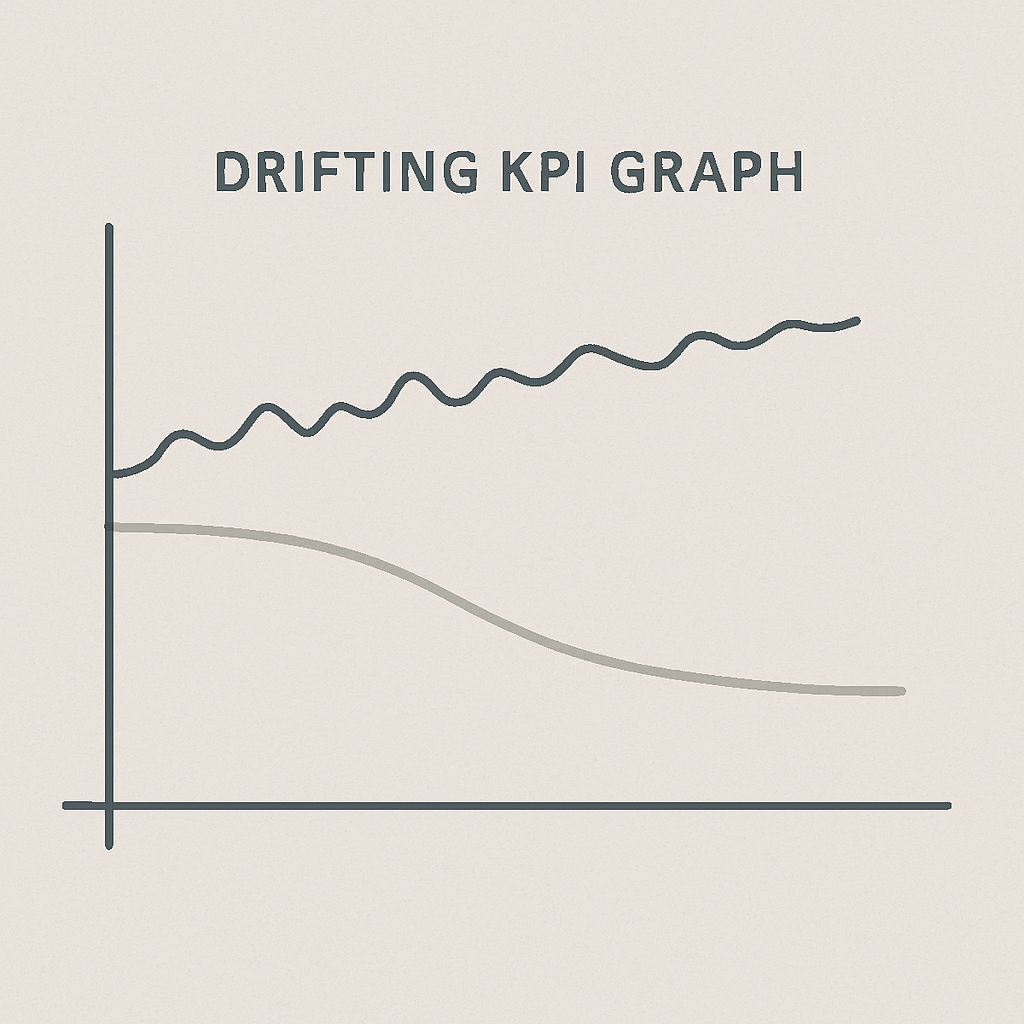
KPI drift is one of the most misunderstood issues in solar analytics. It's not a measurement problem. It's not a monitoring provider error. It's a context problem-an invisible shift in the meaning of KPIs following untracked changes to the plant.
You don't see the drift when it occurs. You only see its consequences: inconsistent baselines, false alarms, wrong comparisons, and reporting anomalies.
This challenge links directly to: Why Technical Plant Information Is the Missing Link in Solar Operations
What Actually Causes KPI Drift?
Monitoring systems measure performance, not context.
KPIs depend heavily on:
- DC capacity
- AC capacity
- inverter topology
- string-to-MPPT mapping
- irradiance sensor configuration
- transformer grouping
- setpoint adjustments
When any of these change and the metadata is not updated, the KPI does not represent the same underlying reality as before.
Drift begins.
The Most Common Triggers of KPI Drift
1. Inverter replacements
A new inverter with different MPPT allocations changes performance signatures.
2. Module replacements or repowering
Even partial repowering alters expected yield.
3. String realignment
Whenever strings are moved between MPPTs, the topology changes.
4. Firmware or logic updates
Performance algorithms shift subtly.
5. AC or DC capacity corrections
A simple fix to the "capacity" field in a monitoring portal can alter normalization.
These updates are typically not tracked in a structured way. They often arrive in emails or task notes.
Why Monitoring Systems Cannot Detect KPI Drift
Monitoring platforms excel at showing deviations from expected performance. They do not maintain a timeline of:
- historical configurations
- capacity changes
- component replacements
- layout shifts
- topology evolutions
Therefore, when the underlying configuration changes, KPIs shift-but the system doesn't know they should have changed.
This is explained further in Why Monitoring Systems Can't Track Everything.
How KPI Drift Damages Operational Clarity
1. False underperformance or overperformance
Performance changes appear, but the cause is structural, not operational.
2. Broken benchmarking across the portfolio
Plants with inconsistent baselines cannot be compared.
3. Misleading year-on-year analysis
Historical KPIs are incompatible with current ones.
See Reproducibility in Solar Analytics (coming soon).
4. Investigation delays
Teams spend hours asking: "What changed? When? Who updated what? Why does the baseline look different?"
What Operators Can Do Today
1. Track every configuration-affecting change
Even minimal change logs prevent drift.
2. Use stable naming conventions
Naming inconsistencies often mask drift triggers.
3. Anchor KPIs in documented baselines
Every plant needs a known "KPI truth".
4. Reassess KPIs after known equipment changes
Especially after replacements or repowering.