Taking Over a Solar Plant: The Data to Ask For
Buying a plant or taking over its O&M means taking over its numbers. What to ask for before signing, so the history behind those numbers comes with the plant.
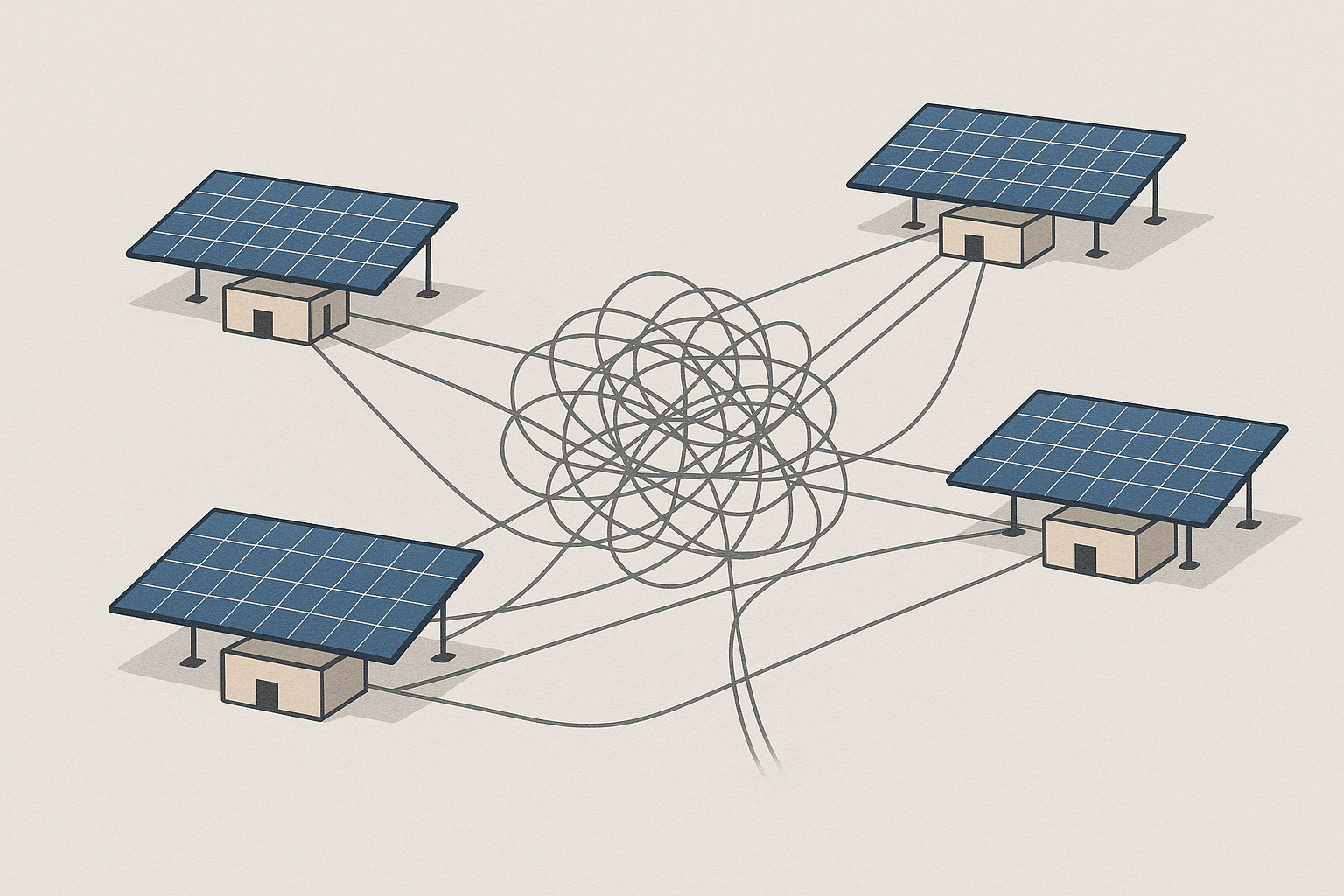
When a plant changes hands, its numbers go with it. The data room shows monthly reports, availability, performance ratio, perhaps a yield assessment, and the price depends partly on them.
After closing, a buyer sometimes finds that the history behind those numbers sits in a portal account they don't control, is kept at full resolution for only part of the time, or was computed with rules nobody wrote down. A new O&M contractor taking over a plant can find the same: they are measured against numbers they can't reproduce.
The time to ask is before signing.
What to ask for
Raw readings for the whole operating history. Inverters, grid meter, irradiance and module temperature, at the resolution they were recorded. As files, with a note on the time stamps (interval start or end, time zone) and the units. Without them, none of the reported numbers can be checked.
The grid meter readings, ideally from the grid operator or the meter operator rather than from the portal. They are the independent witness: they show what reached the grid, whatever the inverters say.
The master data with its history. The module list as built, the inverter list with replacement dates, strings per inverter, sensors with installation and calibration dates, and every capacity change with the date it took effect. A capacity without a date can't tell you which months it applies to. See When a Solar Plant Changes, Its KPIs Move.
The reported KPIs and how they were computed: which portal or system, which rules, and for availability, the clause and the exclusion list of the O&M contract.
The events. Outages, tickets, the maintenance plan, curtailment by the grid operator, insurance claims. They explain the dips, and they decide which hours a contract excludes.
Access. Which portal accounts and interfaces are handed over, on which date, and what the previous owner or contractor keeps.
Check before you sign
Pick one month, recompute availability and performance ratio from the raw data in the data room, and compare with the reported numbers. There are three possible outcomes:
- They match. The rules can be written down and carried on.
- They differ, and the difference can be explained. Then you know which rules were used, and can decide whether they suit you.
- They can't be recomputed, because the raw data or the master data is missing. That is a finding too, for the price or the contract, and not an accusation.
Doing it yourself
A technical advisor usually reviews the plant itself. The data check needs the same skills as any KPI audit: PV KPIs, time series, and patience with formats. Allow time for it: raw readings in a data room often need work before they can be used.
Or let us do it
The KPI audit works on a data room as well as on a portal: send one plant and one month. We recompute performance ratio and availability, compare them with the reported numbers, and list what is missing: what could be exported, at what resolution, and how far back. We check the numbers. Whether the plant is worth the price stays your call.
See also
Read next
Send one plant, one month.
You get performance ratio and availability as a base row with the rules written down, the difference against each reported number with what explains it and what stays open, a method card next to every number and a 30-minute walkthrough. Nothing changes in your monitoring.
Send one plant, one month